Storing and handling
How to Keep Pallets Dry
Wet pallets mold, and a moldy pallet can get a load turned away at the dock. How to store pallets dry: under cover, off the ground, with air around them.
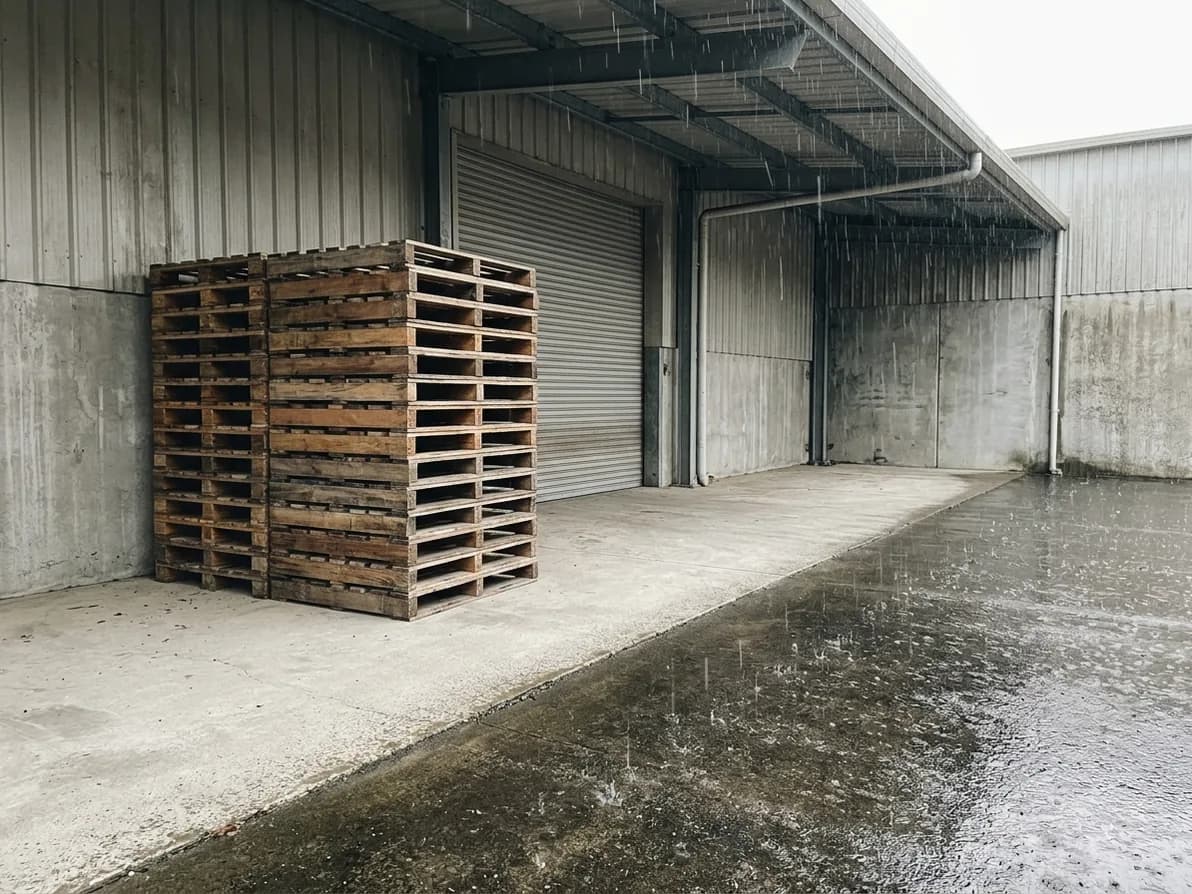
The short answer. Store pallets under a roof, off bare ground, with air moving around them, and use the oldest ones first. Wood takes on water from rain, wet ground and damp air, and mold grows on wood that stays wet. Never keep pallets shut in a closed trailer. Check each pallet before it goes under a load, and set aside any with mold on it.
Why a wet pallet costs more than a pallet
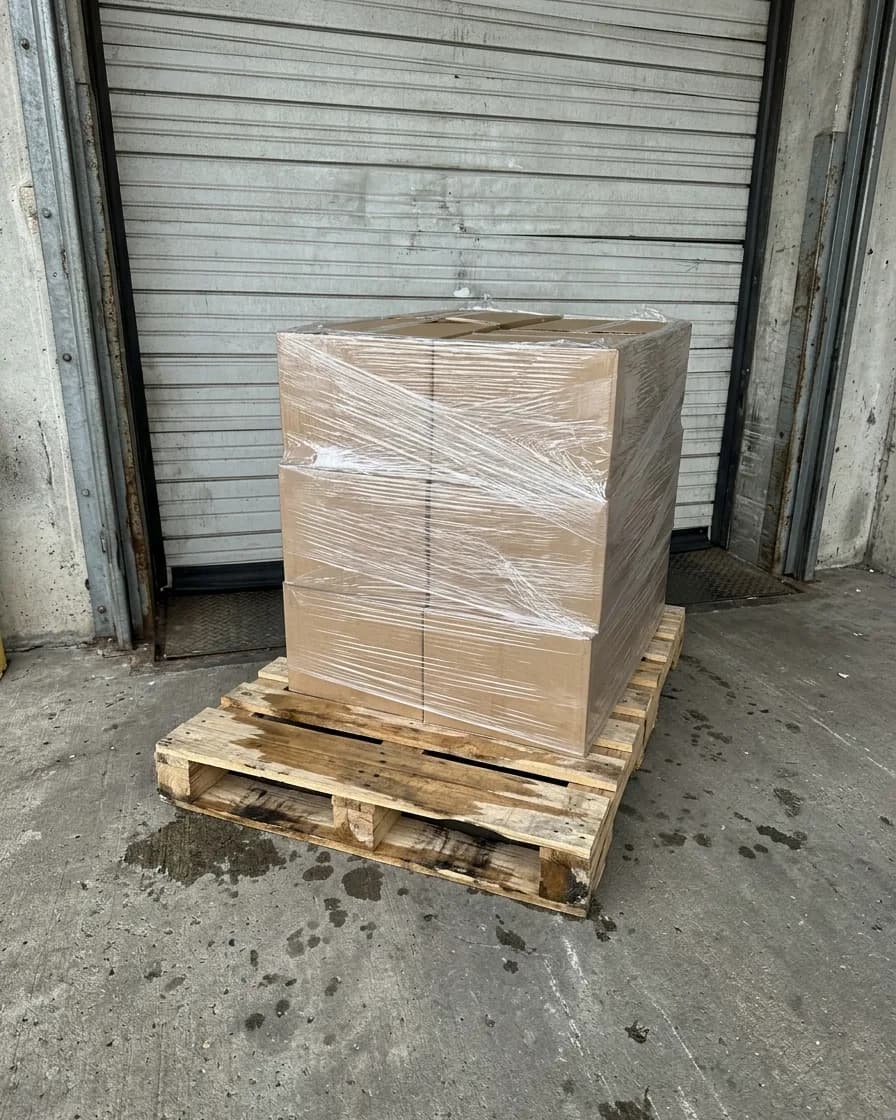
A pallet is the cheapest thing on the truck, until it gets wet. Wood soaks up water from rain, wet ground and damp air, and gives it back slowly.1 Wet wood grows mold, and once mold takes hold on a pallet it spreads quickly and can move onto the boxes, the wrap and the goods on top.1
That's where the real cost sits. A load that arrives on a moldy pallet can be turned away at the receiving dock. Then you're paying for the trip back, the re-pack, the late delivery and the phone call to your customer, all for a pallet that cost a fraction of any of them.
The good news: mold on pallets is almost always a storage problem, and storage is something you control.
What mold needs to grow
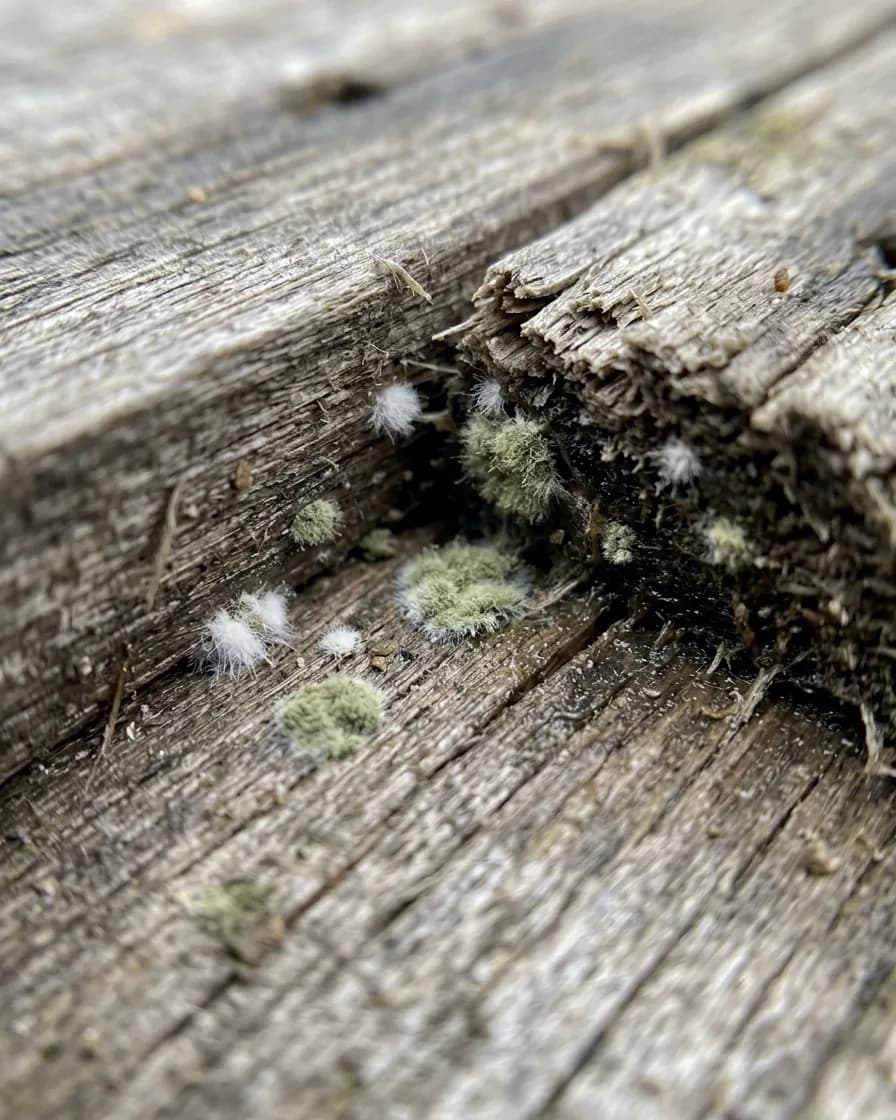
Mold needs four things: spores, food, warmth and water. You can't do much about the first three. Spores are in the air almost everywhere, wood is food, and mold grows across a broad range of temperatures, Georgia's included.3
Water is the one you can control. According to Virginia Tech's pallet and packaging researchers, wood kept below about 20 percent moisture won't support mold.3 Give spores damp wood and still air, and they can start growing in just a day or two.3
So every habit in this guide comes back to two things: keep water off the wood, and keep air moving over it.
Where the water comes from
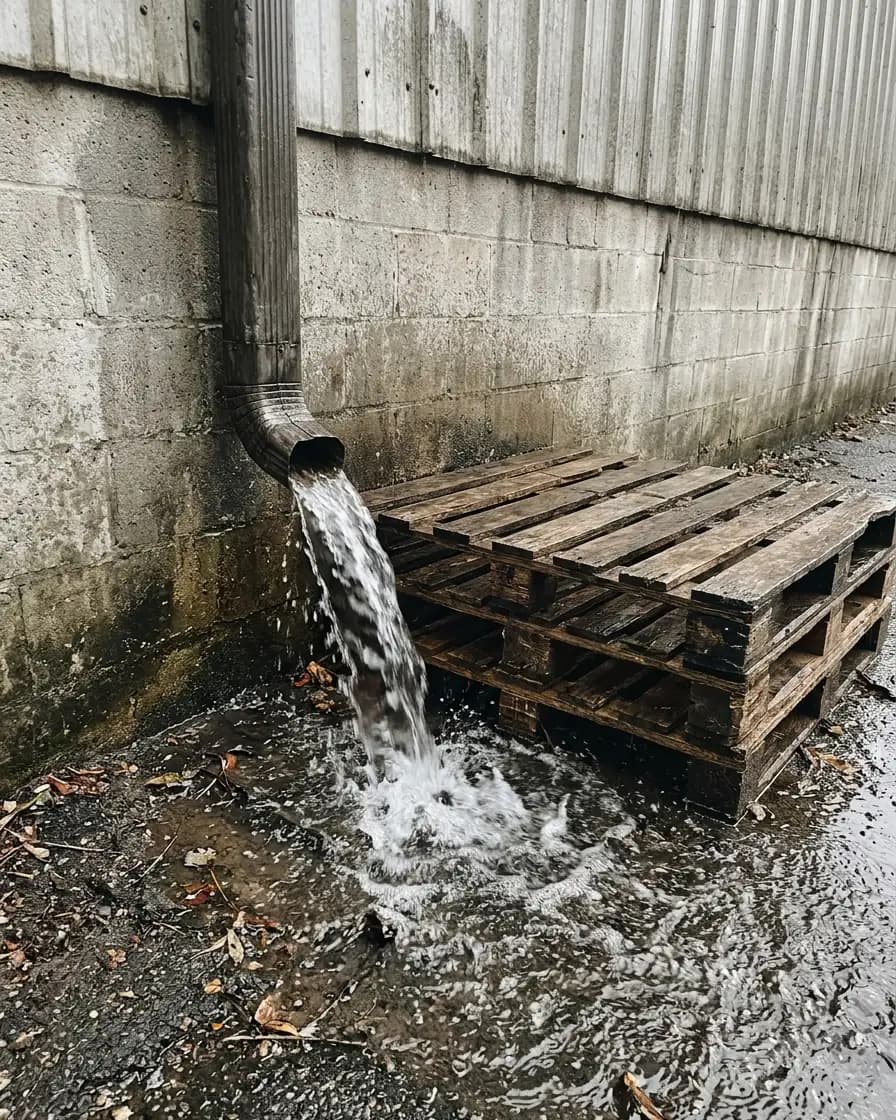
Rain is the obvious one, but it's rarely the only one. Pallets pick up water from:
- Rain and runoff. An uncovered stack, or one by a downspout or under a leaking roof.
- The ground. Dirt, grass and puddles wick water up into the bottom pallet.
- Damp air. Wood keeps trading moisture with the air around it, so a humid week wets a dry stack.1
- Condensation. Cool nights followed by hot, humid mornings make water condense on pallets and freight, the "trailer sweat" drivers know.1
- The wood itself. Freshly cut wood still holds a lot of water and gives it off into a closed, hot space.1
- Your own floor. A dock that's hosed down, or a door left open in a storm, wets the stacks nearest it.
Once you know which of these hits your yard, the fix is usually simple.
Keep them under cover
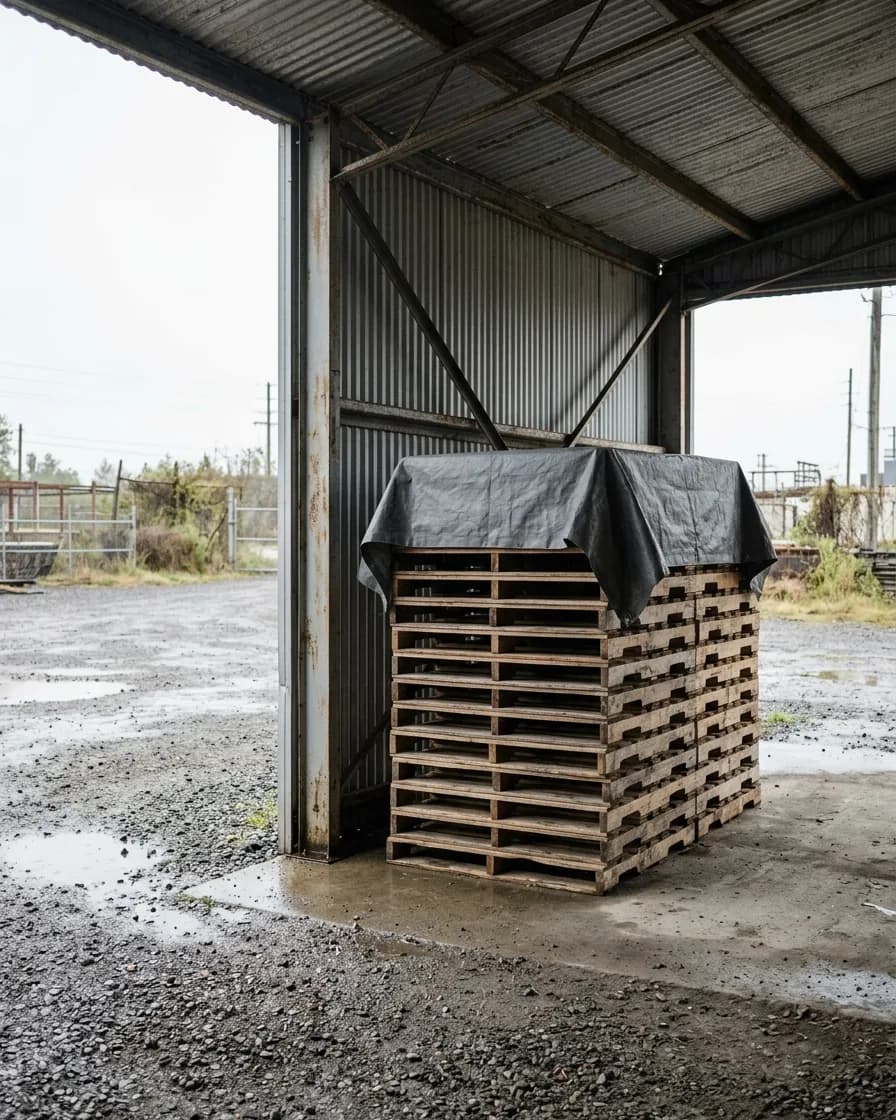
Rain soaks a stack faster than anything else, so cover comes first. Keep pallets indoors, or under a roof or an open-sided shed.2
If a stack has to sit outside for a while, put a tarp over the top only and leave the sides open. A tarp wrapped around the stack and tied down to the ground traps the damp air inside, where it can't dry.3 Check the tarp after a storm: a sagging tarp holding a pool of water will drain it straight into the stack.
Get them off the ground
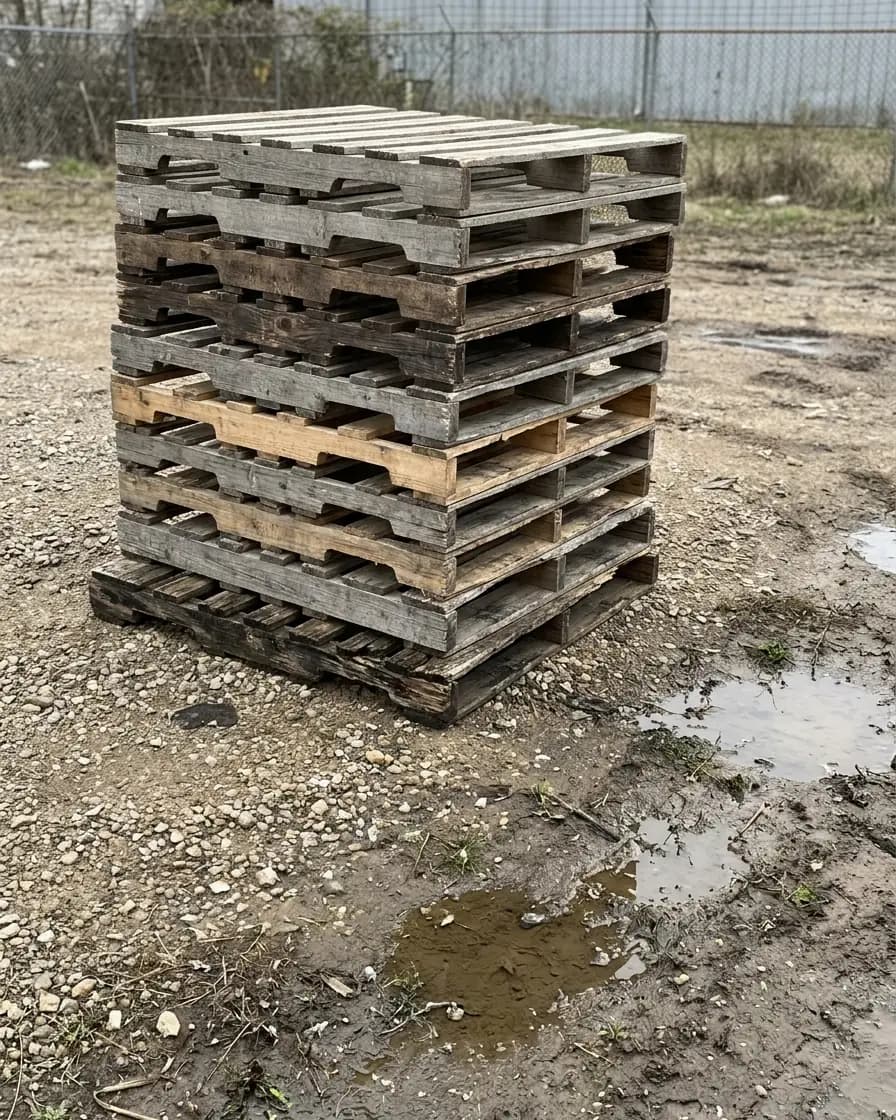
Water wicks up from the ground into the bottom pallet, and the wet works its way up the stack. Raise every stack off bare ground.2
- Stand stacks on dry concrete or a well-drained gravel pad, never on dirt or grass.
- Use one old pallet as a base under each stack, and never ship on that one.
- Keep stacks away from downspouts, drains and the low spots where water pools after a storm.
- Indoors, keep them back from dock doors that let rain blow in.
Leave room for air
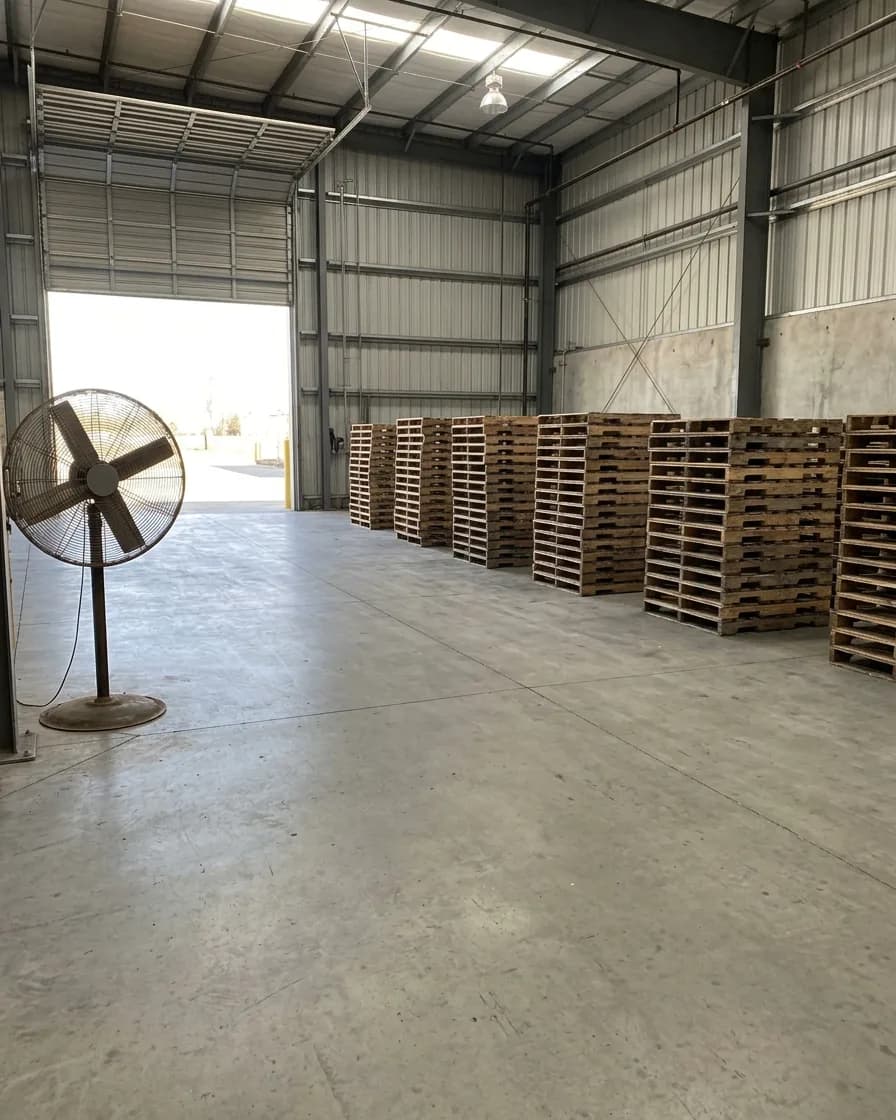
Moving air is the simplest and cheapest way to dry wood.1 Still, damp air is what mold likes best.3
- Leave a gap between stacks, and between the stacks and the wall.
- Don't push stacks into a dead corner where air never moves.
- Indoors, open doors on dry days, and run fans if the building is damp.2
- If a delivery arrives wet, spread those pallets out to dry before you stack them tight with the dry ones.
Never store pallets in a closed trailer
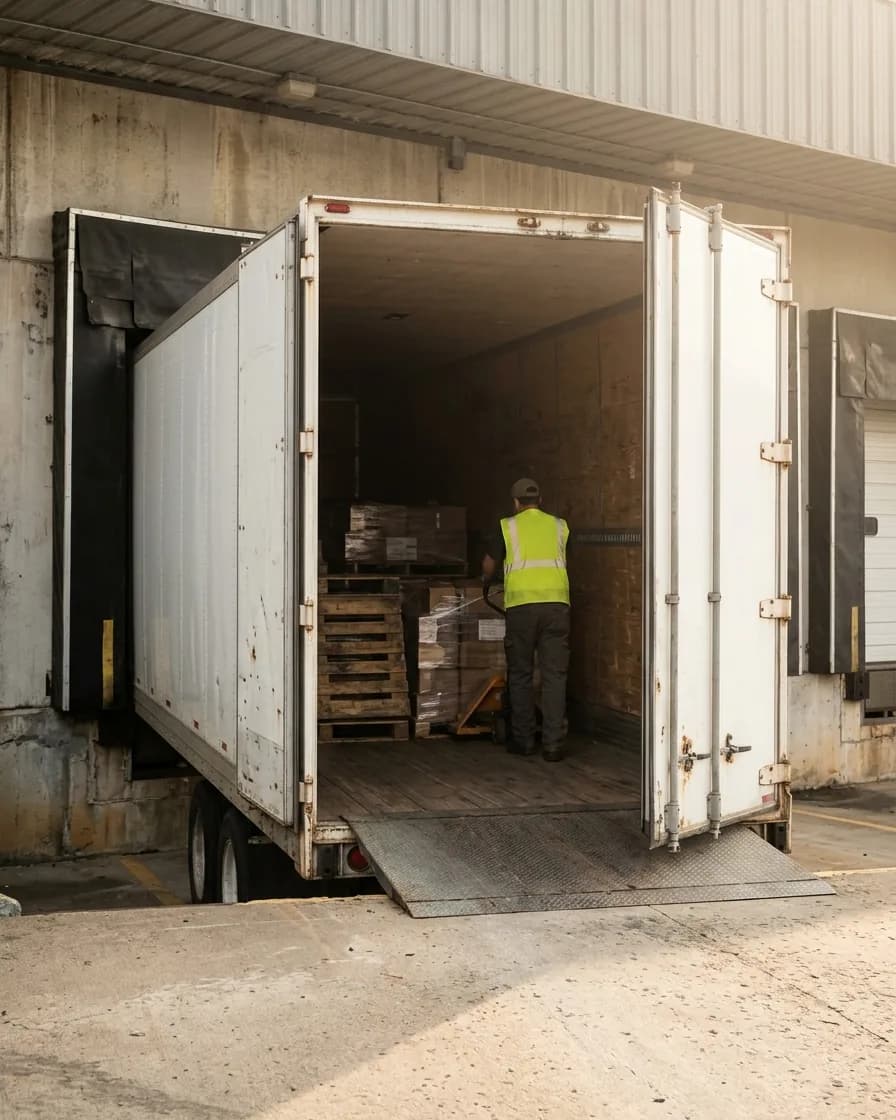
A closed trailer or shipping container is the worst place to keep pallets in warm weather. With the doors shut, it turns into a humidity chamber, and it's an incubator for mold.12
Stack them safe and stable
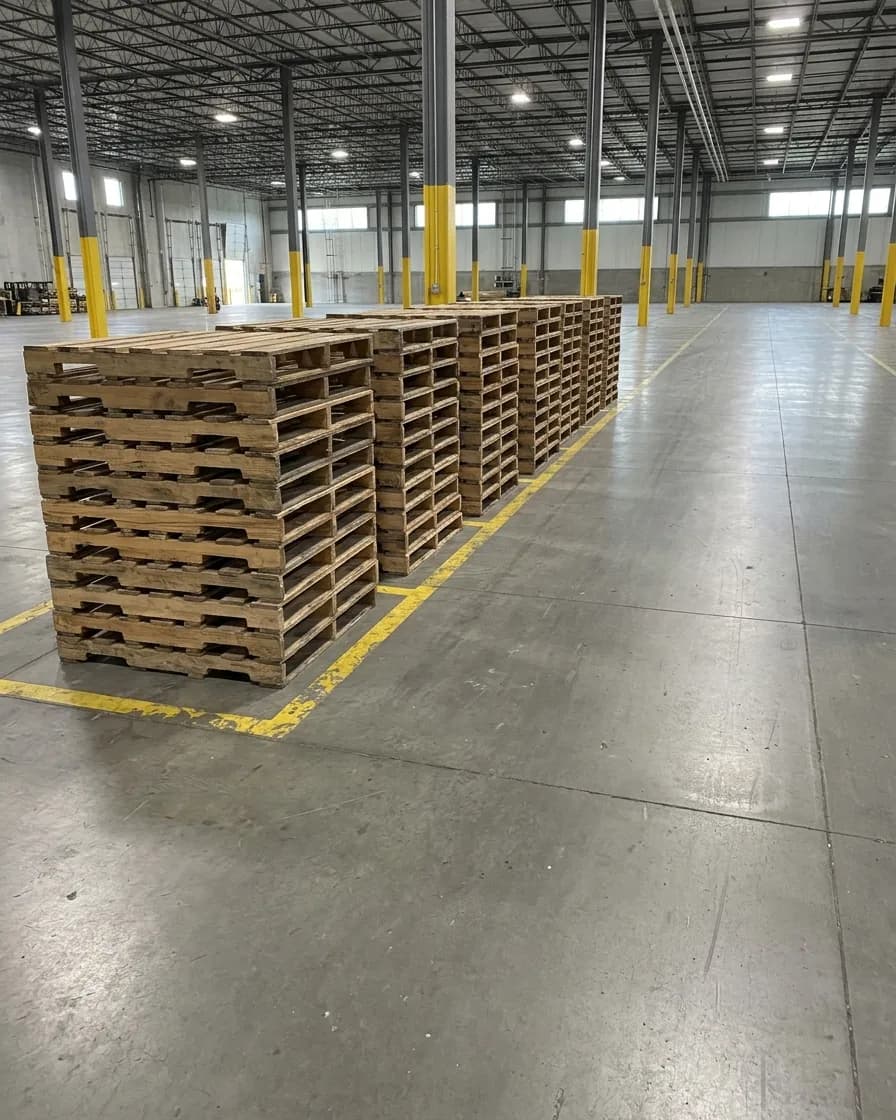
A dry stack is no good if it falls over. Federal workplace rules say stored material mustn't create a hazard: stacks have to be stable and secure against sliding or collapse, and storage areas have to be kept free of piles that become a trip, fire or pest hazard.4 Exit routes have to stay clear, with nothing stored in them, even for a day.5
- Stack pallets flat and square, the same size together.
- Keep stacks to a height that stays stable, and lower outside, where wind and soft ground play a part.
- Keep stacks out of exit routes and away from heaters and electrical panels.
- Don't let broken pallets pile up between stacks: clear them on a schedule.
Use the oldest pallets first
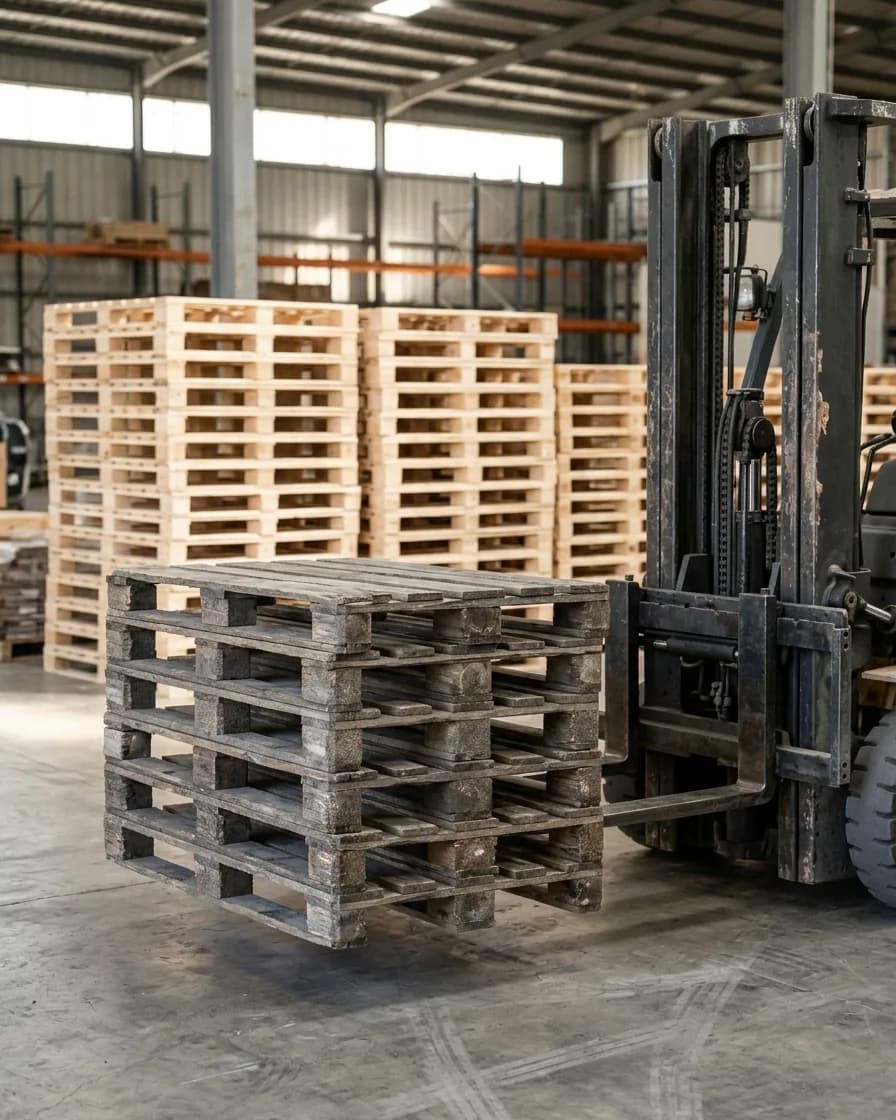
The longer pallets sit, the higher the chance they mold.2 So treat them like stock with a date on it.
- Put new deliveries behind or on top of the old, and send the oldest out first.
- Keep only what you'll use in the next few weeks, rather than a mountain that sits all season.
- Order on a set day. Stock pallets are delivered the same week across Metro Atlanta, so they don't need to sit in the yard waiting for a load.
Check before you load, and pull the bad ones
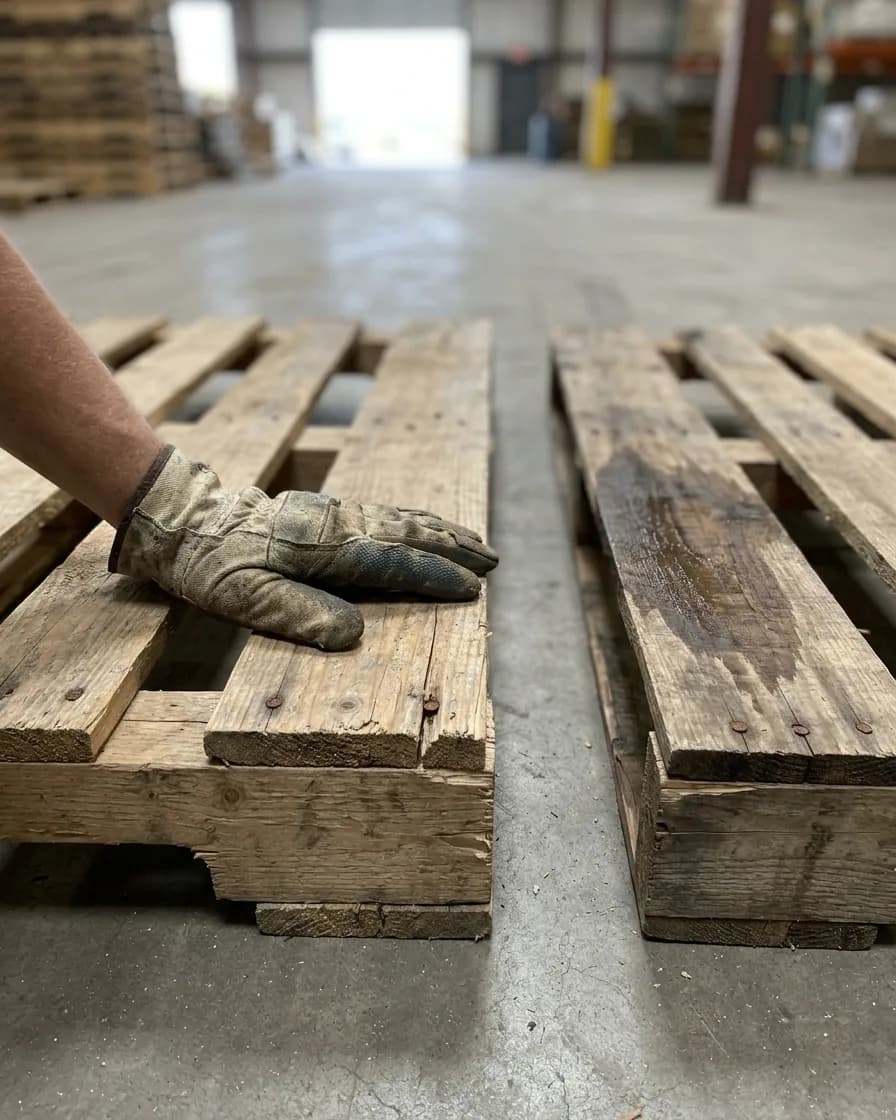
Make a quick look part of loading. Before a pallet goes under a load, check for:
- white, green or black spots, fuzzy or powdery on the surface
- a musty smell
- wood that feels damp or cold to the touch
Set any pallet with mold aside, away from the good stock, because mold spreads.1 Don't ship on it. Cleaning can take off what you see, but it doesn't dry the wood, so mold can come back.3 Whoever receives the load decides what they accept, so for food, drink or medicine loads, use a clean, dry pallet instead.
Moldy and broken pallets pile up fast, and a scheduled pickup clears them. Pickup is a paid service, quoted before we come.
More: Quote a pallet pickup
A five-minute weekly check
- Every outdoor stack is covered on top, with the sides open
- No stack stands on dirt, grass or in a puddle
- Gaps between stacks, and between the stacks and the wall
- No pallets stored in a closed trailer or container
- Stacks are flat, stable and out of exit routes
- The oldest pallets are at the front, ready to go out first
- Moldy and broken pallets set aside, and a pickup booked if the pile is growing
At a glance
| Where the pallets are | What goes wrong | What to do |
|---|---|---|
| Outside on dirt or grass | Water wicks up into the bottom pallet | Move them onto concrete or gravel, on an old base pallet |
| Outside with no cover | Rain soaks the whole stack | A roof or a shed, or a tarp over the top with the sides open |
| Under a tarp tied to the ground | Damp air is trapped inside | Take the sides off, keep the top |
| Packed tight against a wall | Damp air can't move | Leave gaps between stacks and the wall |
| Shut in a trailer or container | Warm, still air turns humid | Unload them, or open the doors when it's safe |
| Indoors, dry, with air moving | Little | Use the oldest first |
Common questions
Do heat treated pallets mold?
They can. Heat treatment can kill mold that's already on the wood, but it doesn't stop new mold from growing later, so heat treated pallets need the same dry storage as any other.23
Is a tarp enough?
Over the top, yes, with the sides open so air can move. A tarp wrapped and tied down to the ground keeps the damp in.
Can I ship on a pallet with a little mold on it?
Better not. Whoever receives the load decides what they accept, and a moldy pallet can get the whole load turned away. Set it aside.
Can I clean mold off a pallet?
Cleaning can take off what you see, but it doesn't dry the wood, so mold can come back.3 For food, drink or medicine loads, use a clean, dry pallet instead.
How long can pallets stay outside?
There's no safe number of days: it depends on the rain and the humidity. Covered, off the ground and with air moving, they keep much longer than in an open pile on dirt.
Is it worse in summer?
Usually. Georgia's humid summers, and the weeks when nights are cool and mornings humid, bring the most condensation.1 Check stacks more often then.
Sources
- National Motor Freight Traffic Association (NMFTA), "Packaging in the Summertime: Wood Pallets, Mold, and the Hidden Risks of Summer Humidity", 7 July 2026. https:/
/ nmfta.org/ news/ packaging- in- the- summertime- wood- pallets- mold- and- the- hidden- risks- of- summer- humidity/ - Pallet Enterprise, "Keys to Controlling Mold on Lumber, Pallets", 1 May 2020. https:/
/ palletenterprise.com/ keys- to- controlling- mold- on- lumber- pallets/ - Pallet Enterprise, "Control the Environment in Order to Control Mold", 1 July 2018. https:/
/ palletenterprise.com/ control- the- environment- in- order- to- control- mold/ - Occupational Safety and Health Administration, 29 CFR 1910.176, Handling materials, general. https:/
/ www.osha.gov/ laws- regs/ regulations/ standardnumber/ 1910/ 1910.176 - Occupational Safety and Health Administration, 29 CFR 1910.37, Maintenance, safeguards, and operational features for exit routes. https:/
/ www.osha.gov/ etools/ evacuation- plans- procedures/ emergency- standards/ maintenance- safeguards- features
Ready to order?
Tell us the size, grade, how many and where. Stock pallets are delivered the same week across Metro Atlanta.
Get a pallet quote7 days to get your pallets sorted
A 7-day training for Atlanta warehouses and plants, one short lesson a day: count what you have, reuse what's good, buy the right grade, and set an order day.